Walking through the historic centre of Lecce, also known as the “Florence of the South”, means entering a world of warm golden stone, elegant balconies, hidden courtyards and incredibly elaborate churches. Among the many architectural treasures scattered through the city, one monument stands out as a true symbol of Lecce’s artistic identity: the Basilica of Santa Croce.
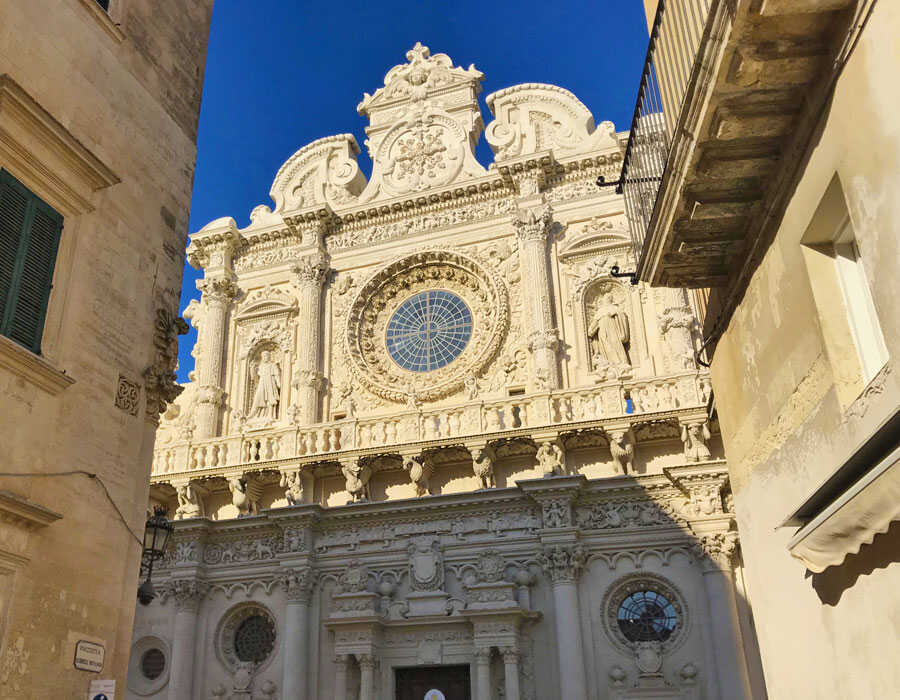
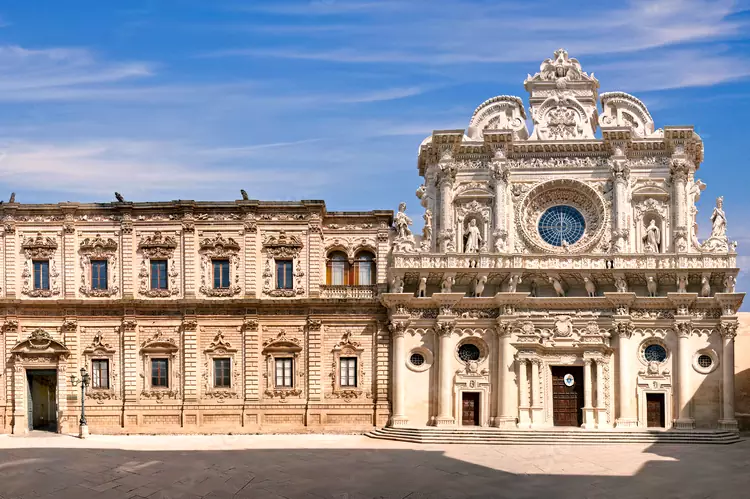
Located on Via Umberto I, next to the imposing Palazzo dei Celestini, the basilica is one of the finest expressions of Lecce baroque. Its spectacular façade alone is enough to make you stop for a few minutes and simply look upwards, discovering new details every time.
A Church Built Over Several Centuries
The history of the Basilica di Santa Croce is almost as fascinating as its architecture.
The first construction project dates back to 1353, although the work was interrupted shortly afterwards. Building resumed much later, in 1549, thanks to the Celestine Fathers.
Some of the most important architects and craftsmen working in Lecce contributed to the church, including Gabriele Riccardi, Cesare Penna and Giuseppe Zimbalo. The basilica was eventually completed in 1689, which helps explain the fascinating combination of Renaissance influences and exuberant Baroque decoration visible throughout the building.
Rather than being created according to a single idea, Santa Croce gradually evolved into the extraordinary monument visitors can admire today.
The Beauty of Lecce Stone
One of the secrets behind the beauty of the basilica is its material.
Like many historic buildings in the city, Santa Croce was created using Lecce stone, a local limestone famous for being relatively soft and easy to carve. This allowed generations of local stonecutters and sculptors to create remarkably intricate decorations.
The result is architecture that almost seems to behave like sculpture.
From a distance, the façade appears grand and harmonious. Move closer, however, and an extraordinary collection of figures and ornamental details begins to emerge.
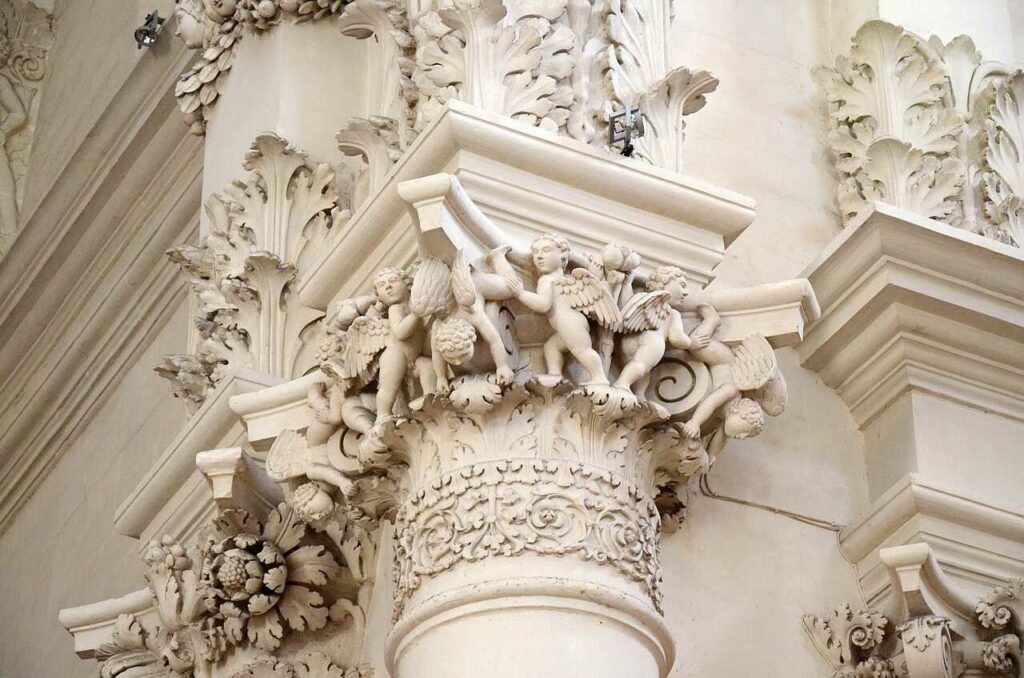
Columns, plants, animals, human figures and symbolic decorations seem to cover almost every available surface.
Don’t Rush Past the Façade
The façade of Santa Croce deserves time.
Among its most recognisable features are sculpted figures supporting architectural elements, statues representing Faith and Charity, a group of thirteen putti and, above all, the magnificent Baroque rose window.
Instead of looking at the church as a single building, try exploring it section by section.
Start from the lower façade and gradually move your eyes upwards. The closer you look, the more complex the decoration becomes.
It is one of those places where spending an extra ten minutes makes a real difference.
Step Inside the Basilica
After the visual explosion of the exterior, entering Santa Croce offers another perspective on Lecce’s artistic heritage.
The interior is richly decorated, with side chapels, stucco work, religious artwork and architectural details that invite visitors to slow down and explore.
A particularly interesting feature is the pulpit made from Lecce stone, which showcases the versatility of the local material and the extraordinary skill of the craftsmen who worked with it.
The apse also contains religious scenes including the Adoration of the Shepherds, the Annunciation, the meeting between Mary and Elizabeth, and an episode connected with the biblical flight from Egypt.
Even travellers who are not particularly interested in religious architecture can appreciate the craftsmanship involved. Santa Croce is one of the places where this relationship between the city and its stone becomes especially clear.
Why Visit the Basilica di Santa Croce?
If you only have a short time in Lecce, Santa Croce should be high on your list.
Its central location makes it easy to include while exploring the historic centre, and the neighbouring Palazzo dei Celestini creates one of the most impressive architectural corners of the city.
Visit during a leisurely walk rather than treating it as a quick photo stop. Take time to observe the façade from different distances, search for unusual sculpted details and then step inside to experience the contrast between its exterior and interior.
When you leave, continue wandering through Lecce without rushing. Part of the pleasure of visiting the city comes from getting slightly lost among its narrow streets and discovering small squares, artisan workshops and beautifully decorated buildings along the way.
Leave a Reply